What Construction Management Means Here
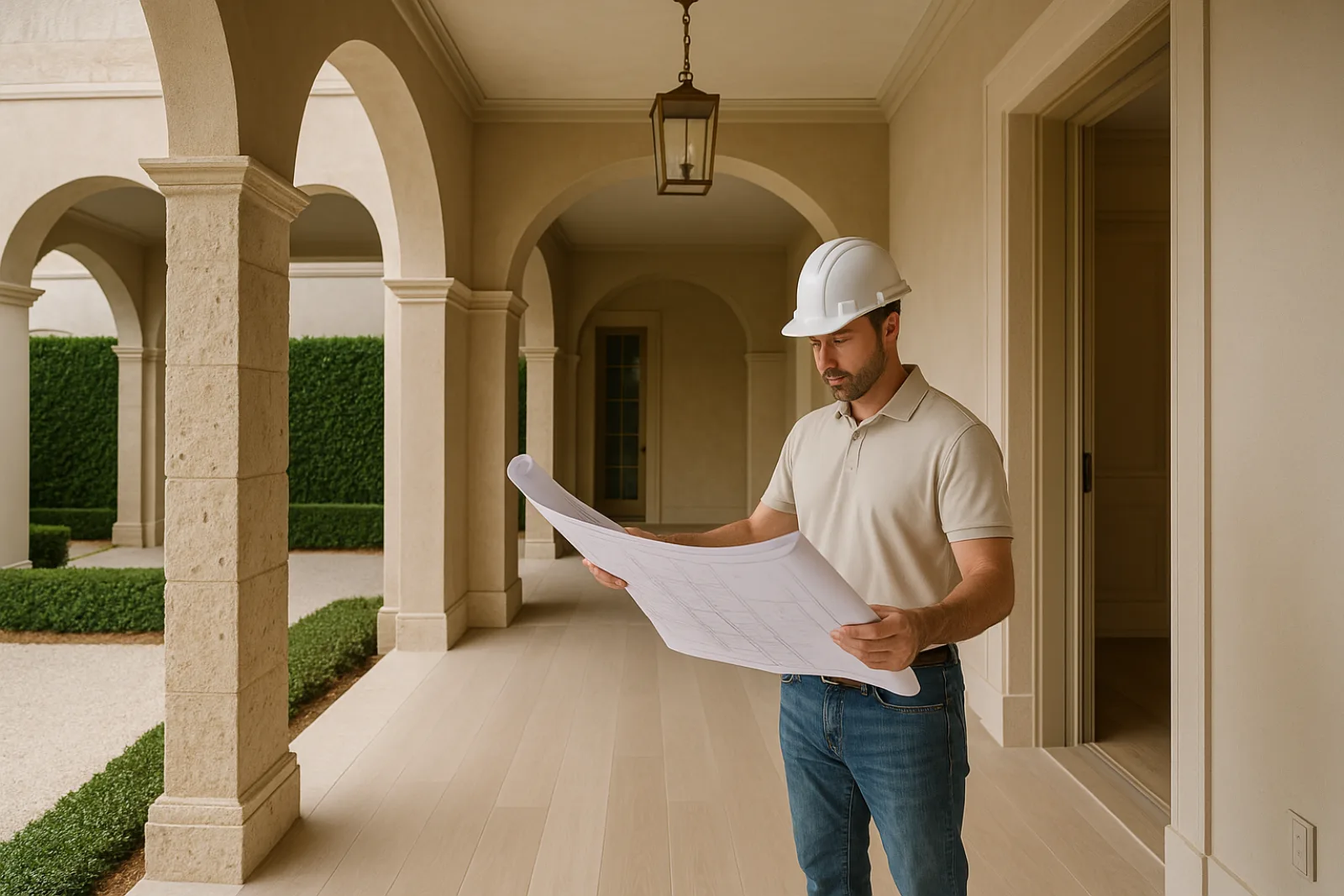
A construction manager works for the owner rather than delivering the project under a single contractor's fixed price, reviewing trade bids, verifying scope against drawings, and flagging discrepancies before they become disputes once work is already under way and harder to unwind without added cost or delay.
On the island, that role extends into board relations as well, since ARCOM and Landmarks conditions can shift scope mid-project, and an owner benefits from someone tracking how those conditions affect cost and schedule independently of whichever contractor is executing the work day to day on site.
Bid Leveling and Trade Procurement
Comparing bids from different subcontractors only works if every bid reflects the same scope, and on a board-reviewed project that scope can be more specific than a standard renovation, particular materials, particular details, particular sequencing tied to ARCOM conditions that a generic bid template simply won't capture accurately.
We level bids against the approved drawings and board conditions specifically, so an owner is comparing true equivalents rather than discovering after award that one bidder priced a lesser material substitution the board would never have approved for that property in the first place at all.
Schedule Management Around the Seasonal Calendar
Every schedule on the island has to account for the roughly November-through-April exterior restriction, and a construction manager's job includes stress-testing that schedule against realistic trade availability, not just an optimistic version assembled before subcontractors have actually committed to specific, confirmed dates for their work on site. A schedule that only works on paper tends to reveal its weaknesses once the seasonal window is closing.
We track the schedule against both board conditions and the seasonal window continuously, flagging early when a delay in one phase threatens to push exterior work into the restricted period, since that's the kind of slippage an owner needs to know about immediately, not at the next scheduled monthly update meeting.
Change-Order Control
Change orders on a board-approved project carry a specific risk: a field change that seems minor can, if it alters something ARCOM reviewed, require its own approval before work can proceed, adding both cost and calendar time that a change of similar scope elsewhere in the county simply wouldn't trigger at all.
We flag any proposed change against the approved drawings before it's authorized, specifically to catch that risk early, since discovering mid-construction that a field change needs its own board hearing is a far more expensive problem than catching it early during the change-order review itself.
- Verification of change scope against original ARCOM-approved drawings
- Cost review before authorization, not after work proceeds
- Schedule impact assessment for every proposed change
- Documentation trail for the closeout and warranty record
Quality Assurance for Coastal Construction
Quality assurance on the island focuses heavily on envelope and waterproofing detail, since a failure there, a flashing detail, a membrane lap, a sealant joint, has considerably more consequence in a salt-air, high-humidity environment than the same shortcut would in a drier inland climate elsewhere in the state entirely.
We inspect that work at the stage where it's still visible and correctable, before drywall or finish materials cover it, rather than relying entirely on the town's own inspection schedule to catch a detail that a qualified eye should identify during construction, well before occupancy, not after a warranty claim.
Owner's Representation Through Board Review
Attending ARCOM and Landmarks hearings on an owner's behalf, and preparing the materials those boards actually respond to, is its own specialized function separate from running daily construction. An owner who's never presented to ARCOM benefits from representation that has done it many times before on comparable projects nearby, and knows what each board tends to ask for.
That representation continues after approval too, since board conditions sometimes require follow-up documentation or a final site visit before a file is closed, and tracking those requirements to completion keeps a project from stalling at the finish line over a small administrative item that was simply overlooked.
Closeout, Warranty and Final Documentation
Closeout on a construction management engagement includes verifying that completed work matches both the building permit and the board-approved drawings, assembling warranty documentation by trade, and confirming final inspections and certificate of occupancy are secured before the engagement is considered fully complete for the owner.
A project like Sandstone Retreat reflects the kind of documentation trail this process produces, one an owner can reference years later for insurance, resale or a future renovation that needs to account for what the town and the boards have already approved on that specific property and address.
What Drives Cost and How to Start
Construction management fees are typically structured around the scope of oversight required, which on the island includes board-hearing preparation and attendance, bid leveling across multiple trades, and continuous schedule tracking against the seasonal calendar that a simpler inland project simply wouldn't need to budget for.
- Board-hearing preparation and attendance across ARCOM and Landmarks
- Bid leveling and trade procurement across the full subcontractor roster
- Continuous schedule tracking against the seasonal exterior restriction
- Quality assurance inspections at each concealment stage of construction
We start with a review of existing drawings, budget and board status, then build a schedule and procurement plan around what's realistic given the calendar, before recommending trades and setting up the bid-leveling process the owner will ultimately rely on throughout the entire duration of the project from start to finish.
Common questions
A construction manager works for the owner's interests directly, reviewing bids and controlling costs across multiple trades, rather than delivering the project under a single contractor's fixed-price contract for the full scope of work.
Yes, typically on the owner's behalf, preparing the submission materials and presenting the project in a format those boards are accustomed to reviewing, which can affect how smoothly a hearing proceeds.
A change that alters something ARCOM specifically reviewed may require its own approval before work can proceed, so we verify every proposed change against the approved drawings before authorizing it for construction.
Often it means the bids aren't reflecting the same scope. We level bids against the approved drawings and board conditions so an owner is comparing genuinely equivalent proposals before awarding a contract.
Salt air and humidity accelerate the consequences of an envelope or waterproofing shortcut. We inspect that work while it's still visible, before finishes cover it, rather than relying solely on standard town inspections.
Warranty documentation organized by trade, confirmation that completed work matches both the permit and the board-approved drawings, and records of final inspections and the certificate of occupancy.