
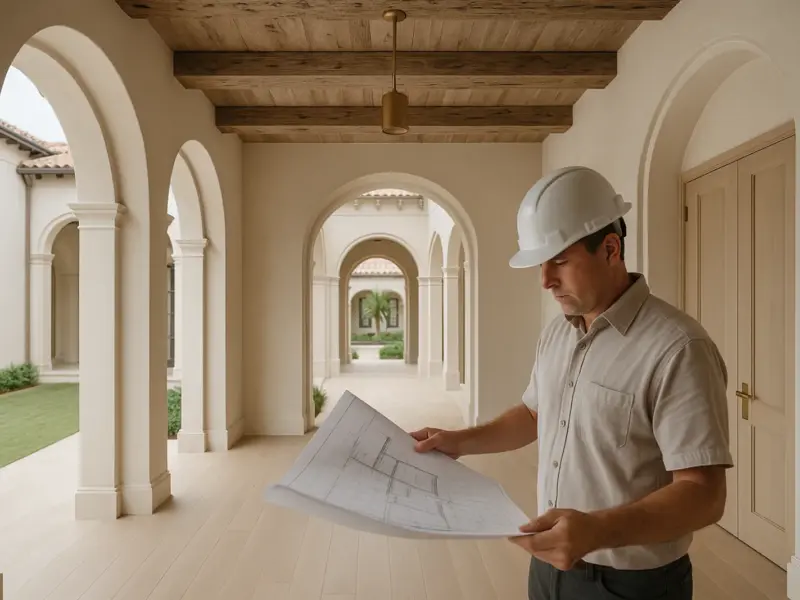
Where This Delivery Model Fits
Construction management suits larger-scope projects — a Royal Palm Yacht & Country Club estate with multiple design consultants already engaged, or an Old Floresta renovation where an architect and interior designer are both under separate contract — where a homeowner needs one party managing trades, HOA compliance and budget across several other professionals' work.
It differs from design-build in one key way: the construction manager represents the owner's interests in procuring and overseeing trade contracts, rather than holding the design and construction contract itself. That distinction matters most when a homeowner wants an independent, unbiased check on pricing and schedule from someone who isn't also the one selling the underlying design work.
Bid Leveling Across Trade Contractors
Bid leveling means collecting proposals from multiple trade contractors for the same defined scope and normalizing them so a homeowner is comparing genuinely equivalent work, not just a bottom-line number that hides different assumptions about materials, labor or schedule buried between two competing bids on paper.
On an HOA-governed project with committee conditions on exterior materials, bid leveling has to confirm every contractor priced the same approved specification, since a lower bid based on a non-compliant material substitution isn't actually a comparable number once those committee conditions get factored back into the true cost.
- Normalized scope comparison across competing trade bids
- Verification that bids reflect the same HOA-approved specifications
- Reference and capacity checks on proposed trade contractors
- Licensing and insurance verification before contract award
Procuring and Managing Trades
Trade procurement follows bid leveling — contracting the selected subcontractors, confirming licensing and insurance, and sequencing their work against the project schedule and any HOA-mandated work-hour restrictions. On a waterfront project, that sequencing includes marine or seawall-adjacent trades working alongside standard construction trades, which needs careful, deliberate scheduling to avoid conflicts.
Schedule management means tracking every trade against the master schedule and flagging conflicts before they cause real delay — a common example being a finish trade scheduled to start before a rough inspection has actually been passed, which happens more often than most homeowners would ever expect on a tightly sequenced project.
Controlling Change Orders
Change-order control means every scope change gets documented, priced and formally approved before work proceeds, rather than trades performing extra work first and presenting a bill afterward, once it's already too late to negotiate. On older Old Floresta homes, where demolition regularly surfaces conditions original drawings didn't anticipate, that discipline is what keeps a budget from drifting.
A construction manager representing the owner's interests reviews change-order pricing against market rates rather than simply passing along a trade's submitted number, which matters most on larger projects where dozens of change orders can accumulate steadily over the course of construction if left entirely unchecked by an independent party.
Quality Assurance Through Construction
Quality assurance means regular, scheduled site walks checking completed work against the specified drawings and materials, not just a single final inspection at the very end. On an HOA-governed property, that includes confirming exterior work actually matches what the architectural committee approved, since a mismatch discovered at final inspection is costly to correct.
On waterfront properties, quality assurance also covers verifying waterproofing, seawall-adjacent construction and envelope details that are expensive and disruptive to fix once finishes are installed over them, which is why those specific checks happen at the rough stage rather than being deferred to a final walkthrough near closeout.
- Site walks checking work against approved drawings and specifications
- HOA architectural committee compliance verification for exterior finishes
- Waterproofing and envelope checks at the rough construction stage
- Punch-list management through final completion
What Drives Cost in This Model
Construction management fees typically scale with project complexity and the number of trades being coordinated, which tends to run higher on multi-consultant projects like a country club estate or a waterfront renovation than on a straightforward single-trade scope elsewhere in the city. Bid leveling itself is designed specifically to control the underlying construction cost.
Change-order discipline is where a construction manager's value shows up most directly in the final number — catching unnecessary or overpriced change orders before they're approved keeps a project closer to its original budget than it would ever run under looser, less structured, less accountable oversight arrangements.
Coordinating Closeout and Warranty
Closeout under construction management means confirming every trade has fully completed its punch-list items, collecting warranty documentation from each subcontractor, and assembling final inspection records into a single package for the homeowner, rather than the homeowner having to chase a dozen different subcontractors individually after the project finally wraps up.
Warranty coordination continues well after completion — if an issue surfaces with a specific trade's work months later, the construction manager has the documentation and contractor relationships needed to pursue a warranty claim on the homeowner's behalf, rather than leaving that follow-up to the homeowner working entirely alone.
Starting With a Construction Manager
This model works best when brought in early, during design development, alongside the architect and any other consultants, so bid packages reflect a coordinated, genuinely buildable scope that already accounts for HOA requirements rather than being assembled after drawings are already finished and disconnected from construction reality.
From there, bid leveling, trade procurement and schedule management proceed together through construction, with the homeowner receiving regular, consistent reporting on budget, schedule and overall quality, rather than only hearing from the project when something has already gone visibly wrong out on the job site.
Common questions
Design-build holds the design and construction contract as one team. Construction management represents the owner's interests in procuring and overseeing separately contracted trades, often alongside an independently engaged architect or designer, rather than combining design and construction under one contract.
Yes, and it's often a good fit for country club and gated community projects with multiple consultants already engaged, since bid leveling can specifically verify that competing trade bids reflect HOA-approved materials and specifications before contracts are signed.
The construction manager, representing the owner's interests, reviews change-order pricing against market rates before approval, rather than a homeowner evaluating trade-submitted pricing without an independent check on whether it's reasonable.
It tends to make the most sense on larger, multi-trade or multi-consultant projects — a whole-home renovation or a waterfront estate — where the coordination and bid-leveling benefits outweigh the additional layer of management on a smaller single-trade scope.
The construction manager retains warranty documentation and contractor relationships from the project, which supports pursuing a warranty claim on the homeowner's behalf rather than leaving that follow-up entirely to the homeowner.
Ideally during design development, alongside the architect, so bid packages and trade scope reflect a buildable, HOA-compatible plan from the start rather than being assembled after drawings are already finalized and disconnected from committee expectations.