A homeowner in Delray Beach once called after a fast-moving storm left water streaks on a hallway ceiling. The roof had survived, but the weakest link had not. That is what most people miss. Hurricane protection is rarely about one miracle product. It is about choosing the right materials and installing them as a system.
If you are reading this while worrying about windows, roofs, or the salty breeze that never seems to stop, that concern is justified. South Florida homes face wind, rain, heat, and corrosion all at once. At RENOVA Signature, we see that pressure every season across Palm Beach County and on Boca Raton estate renovation projects. The good news is simple: the right materials can dramatically improve waterfront home protection and reduce avoidable damage.
1) Impact windows and doors
Why laminated glass changes the way South Florida homes handle flying debris
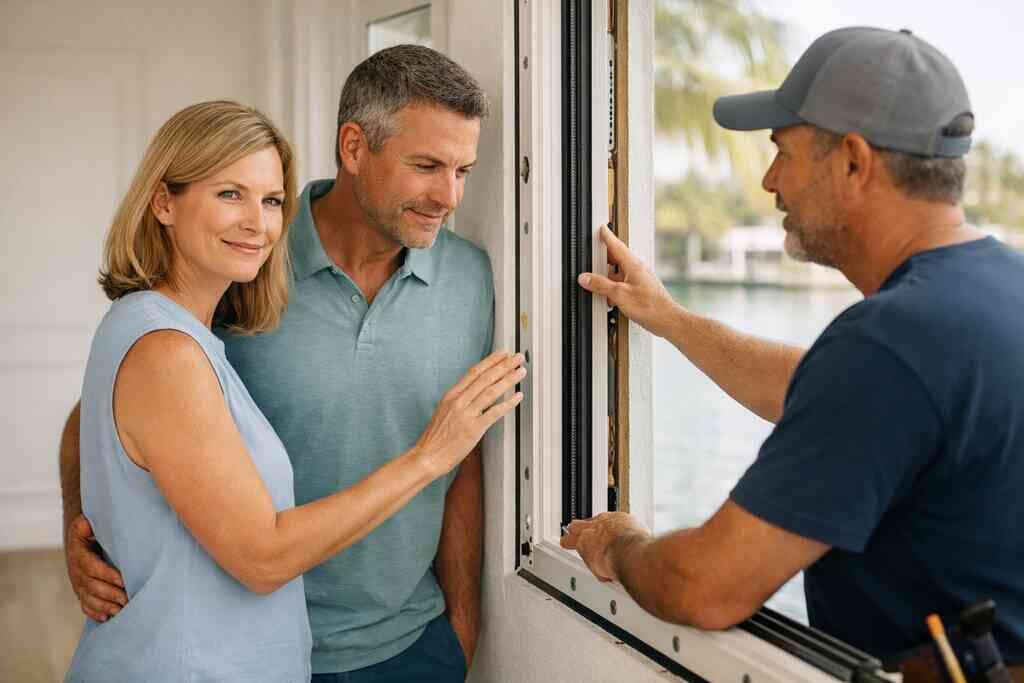
Impact windows and doors do more than look polished. They use laminated glass, which holds together after a strike instead of breaking apart. That matters during wind-borne debris events common in South Florida homes. You are not just protecting the glass. You are protecting the opening, the interior, and the building envelope.
For many owners, the first surprise is how much calmer the house feels after replacement. Less outside noise. Less air leakage. Better comfort. Those are real benefits, especially in Delray Beach luxury homes near busy corridors or waterfront lots where salt and wind never fully rest. If you want a deeper primer, our impact windows and doors for coastal homes in South Florida guide explains what to look for before you buy.
When impact-rated frames matter as much as the glass itself
Here is the part almost no online guide mentions: a strong pane in a weak frame is still a weak opening. Impact-rated frames must resist pressure, anchorage failure, and repeated loading. That is why impact-rated glass should always be paired with approved frame systems and correct installation details. In our experience, the frame, sealant, and anchoring pattern often decide whether a system performs as intended.
We once reviewed a Boca Raton opening where the owner had already chosen premium glass. The installer had overlooked the frame spec, and the replacement plan would have created a mismatch at the rough opening. We corrected the details before demolition. That saved time, reduced rework, and protected the rest of the renovation schedule. For more planning context, see our Florida building code guidance for hurricane-ready remodeling.
What Delray Beach and Boca Raton homeowners should verify before replacing standard openings
Before you replace standard windows or doors, verify three things. First, confirm the product approvals match your location and exposure category. Second, check that the installer understands building permits in Palm Beach County for coastal remodels. Third, make sure water intrusion details, flashing, and sill pans are part of the scope. These small items protect expensive finishes later.
You should also ask how the opening integrates with adjacent upgrades like custom cabinetry, millwork molding, or whole home automation systems. That sounds unrelated, but it is not. Renovations fail when the window trade, drywall trade, and finish trade do not coordinate. A coastal home builder team should manage those handoffs cleanly.
2) Metal roofing systems
Why a roof edge failure can turn a small storm into major interior damage
Roof damage often starts at the edges. Once the edge fails, wind can peel back larger sections quickly. That is why reinforced roofing systems deserve attention before hurricane season, not after. A roof that looks fine from the street can still have vulnerable starter strips, flashing, or underlayment details.
We see this most often on older whole home remodeling projects where the roof was patched over several cycles. The owner thought the house had been maintained. In reality, the weakest components were hidden at the perimeter. If you are planning a luxury home renovation, roof edge detailing should sit alongside kitchen remodeling and bathroom remodeling in the priority list. The shell comes first.
How standing seam metal roofing performs differently from older shingle assemblies
Standing seam metal roofing behaves differently from older shingle assemblies because it has fewer exposed penetrations and more secure panel engagement. That does not make it magic. It does make the system more resistant to uplift when detailed correctly. It also pairs well with outdoor living spaces, pool house construction, and modern farmhouse or Mediterranean revival architecture common in Palm Beach County.
The system’s performance depends on the full assembly. That includes clips, fasteners, flashing, and attic ventilation. A good roof should also coordinate with moisture-resistant materials below it. For homeowners comparing storm-ready building materials for a luxury home renovation, metal often becomes the durable choice when the design supports it.
Where coastal wind zones and Florida Building Code requirements shape the right roof spec
Florida building code matters here, especially in coastal zones where uplift pressures rise fast. The code does not replace judgment. It sets the minimum, and a serious design-build firm should often aim higher. That is especially true for coastal home builder projects and historic home renovation work where geometry, existing framing, and insurance concerns all intersect.
Roof optionStrengthsWatch-outsStanding seam metalFewer exposed edges, strong wind performanceNeeds precise detailingArchitectural shinglesFamiliar look, easier matchingMore exposed componentsReinforced roofing systemsBetter load path continuityMust be designed, not improvisedIf you are weighing a roof upgrade, review what building codes matter most in Palm Beach County on coastal projects before you sign anything. The code path should drive the roof spec, not the other way around.
3) Fiber cement siding
Why moisture and salt air punish wood faster than most owners expect
Wood looks beautiful. It also takes a beating in South Florida. Moisture, salt air, and UV exposure work together to warp, swell, and stain it. That is why weather-resistant exterior cladding matters so much near the coast. The question is not only how it looks on day one. It is how it behaves after seasons of heat and storm exposure.
We often hear from owners who planned a simple stucco repair and replacement but discovered hidden deterioration behind trim. That is frustrating. It is also common. If you are juggling work, family, and a renovation, it helps to think about the whole system, not just the finish layer. Moisture-resistant materials buy you breathing room.
How fiber cement holds up as a weather resistant exterior cladding in coastal neighborhoods
Fiber cement siding offers a strong balance of durability and design flexibility. It resists rot better than many wood assemblies and holds up well in coastal neighborhoods when properly installed. It also works with transitional design, modern farmhouse style, and more traditional facades. For many South Florida design-build projects, that flexibility matters as much as performance.
It can also play nicely with adjacent upgrades like custom closets, laundry room remodels, mudroom design, and home office addition work inside the house. Exterior resilience supports interior investments. If your envelope fails, your finishes suffer. That is why best materials for coastal home renovation in Delray Beach and nearby South Florida is a useful reference when you are comparing exterior and interior scope together.
What to confirm about installation, flashing, and fasteners before the siding goes on
Fiber cement succeeds or fails at the installation stage. You should confirm the flashing plan around windows, corners, and roof-to-wall joints. You should also verify the fasteners meet the approved spec and resist corrosion. In salt air, marine grade hardware and corrosion resistant finishes are not luxuries. They are necessities.
Ask your contractor how the siding integrates with sealed joints and water intrusion prevention details. Ask what happens behind the cladding, not just on the face of it. A house can have premium siding and still fail if the wrap, flashing, or trim transitions are sloppy. That is why construction management matters on every coastal project.
4) Reinforced concrete construction
Why structure matters more than finish materials when hurricane pressure rises
Finish materials get the attention. Structure carries the load. When wind pressure rises, reinforced concrete construction offers one of the strongest ways to protect a home. Concrete walls do not solve every problem, but they create a far more robust shell than light assemblies alone. For luxury coastal home design, that shell becomes the backbone.
This matters even more on larger custom home builder projects. Added square footage, garage addition work, second-story addition plans, and guest house addition scopes all increase the structural conversation. If the shell is underbuilt, the beauty on top has less protection beneath it. That is why architectural design services and structural coordination should happen early.
How reinforced concrete walls and ICF construction change the game for coastal home protection
Reinforced concrete walls resist lateral loads well, and insulated concrete forms add thermal performance to that strength. ICF construction creates a quieter interior, steadier temperatures, and a more hurricane resistant construction profile. It can be a smart fit for luxury home renovation, whole home remodeling, or a new coastal home builder plan where energy use matters too.
We have seen homeowners pair ICF with smart home integration, whole home automation, and high-end lighting design to create homes that feel solid and refined. The mass of the walls reduces exterior noise. The envelope feels more composed. That is a real quality-of-life benefit, not just a technical talking point.
Where structural engineering for coastal homes becomes non negotiable in Palm Beach County
Structural engineering for coastal homes is not optional when the project touches wind exposure, additions, or major wall modifications. That is especially true in Palm Beach County, where building permits and inspection requirements can affect sequencing. If you are planning a custom home builder and design-build services in Palm Beach County project, the structural package should be coordinated with the permit set from the start. A client near Gulf Stream once asked whether a reinforced wall section was overkill for a modest addition. After reviewing the load path and roof tie-in, the answer was no. We adjusted the detail before framing began. That decision protected the project from delays and gave the homeowner more peace of mind. For projects that need clarity, architectural design services for hurricane-resistant construction are often where the best results begin.
5) Hurricane shutters and sealed building envelope
Why protection fails when openings are covered but the envelope still leaks
Shutters help. But shutters alone do not protect a home if the envelope leaks. Water finds weaknesses fast, especially around penetrations, trims, and transitions. That is why hurricane shutters and a sealed building envelope must work together. Covering an opening is not the same as protecting the assembly.
This is where many homeowners feel stuck. They know the storm risk is real, but they do not know which layer should get the next dollar. The honest answer is this: openings, seals, and drainage details all matter together. If one layer fails, water intrusion can reach insulation, drywall, or flooring. Then the damage becomes much larger than the storm itself.
How shutters, sealed joints, and proper water intrusion prevention work together
A strong storm-ready home uses shutters or impact systems, plus sealed joints, plus proper flashing. That combination supports water intrusion prevention and mold resistant drywall protection inside. It also helps preserve interiors like a master bathroom renovation, luxury kitchen remodel, or home theater installation where moisture damage would be costly.
The best approach is systematic. Start with the opening protection, then seal the perimeter, then verify how water can escape if it gets past the exterior layer. Here are the details worth checking:
- Shutter attachment points and substrate condition
- Sealant compatibility with adjacent materials
- Flashing continuity around sills and heads
- Drainage paths behind cladding
- Inspection access for future maintenance
For a deeper look at planning, our wind mitigation strategies for waterfront home protection article gives practical context without the sales noise.
What homeowners in waterfront areas should ask about corrosion resistant finishes and marine grade hardware
If you live near the water, ask about corrosion resistant finishes and marine grade hardware before you approve the details. Hardware that looks fine inland can deteriorate quickly in salt air. That includes hinges, fasteners, tracks, and exposed anchors. It also includes smaller items tied to pool and spa design, seawall construction, and outdoor kitchen BBQ areas where moisture exposure is constant.
The right finish package helps protect the investment long after installation. It also supports aging-in-place remodeling and universal design upgrades, since easier operation matters when hardware stays smooth and reliable. For homeowners comparing scopes, storm-ready building materials for luxury home renovation should include these smaller but critical components.
6) Insulated concrete forms
Why ICF can be a smart choice for luxury home renovation and custom home builder projects
ICF earns attention because it solves several problems at once. It strengthens the envelope. It improves insulation. It reduces outside noise. For a luxury home renovation or custom home builder project, that combination is compelling. It is especially useful when you want durability without sacrificing comfort or design intent.
ICF can also support historic home renovation strategies when the goal is to preserve character while improving performance. It is not right for every project, but it is often worth serious review. If you are planning home additions, second-story addition work, or a guest house addition, the structural and energy benefits can be meaningful. That is why many owners ask us about it early.
How insulated concrete forms support storm resistance, energy performance, and quieter interiors
Insulated concrete forms create a reinforced core between insulating layers. That helps with storm resistance and thermal control. It can also improve comfort in homes with large glass areas, outdoor living spaces, or pool house construction nearby. Fewer drafts. More consistent temperatures. Less noise from traffic or weather.
This is where performance and lifestyle meet. A home office addition stays quieter. A laundry room remodel feels less echoey. A master bathroom renovation holds temperature better, which sounds small until you live with it every day. The house simply feels more composed. That matters.
When this system makes sense for whole home remodeling, additions, or a coastal home builder plan
ICF makes sense when the project is already significant. Whole home remodeling, major exterior rework, and additions are the most natural fits. If you are considering home renovation financing, it may also help to think about lifecycle value instead of only front-end scope. The right shell can reduce future maintenance and support better energy performance.
We use ICF most often where the building envelope is being rebuilt with intention. That can include a Delray Beach luxury homes project, a Boca Raton estate renovation, or a waterfront property where elevated foundation design and flood resilient materials are part of the brief. For owners comparing systems, whole home remodeling with moisture-resistant materials is a useful place to start the conversation.
“We hired this team for a high end kitchen renovation in Delray Beach and the result exceeded every expectation. From custom cabinetry and Calacatta marble to the millwork details, the craftsmanship is flawless. The project manager communicated daily, kept the site immaculate, and handled all permitting without any stress on us. They finished on schedule and on budget, which is rare in this market. If you want a true luxury remodeling experience in South Florida, this is the company to call.”- N S., a 5 star review from RENOVA Signature on Google Business Reviews
7) Metal roofing with hurricane straps and ties
Why the connection points often decide whether a roof stays put
A strong roof is only as strong as its connections. Hurricane straps and ties control the load path between the roof and the walls. If those connections are weak, the roof can move even when the covering itself is sound. That is why roof-to-wall details matter so much in hurricane-resistant construction.
This is the mistake we see most often. Homeowners focus on visible materials and forget the hidden connectors. Yet those small metal pieces often decide whether the building stays intact under severe wind. In coastal home protection, hidden details are often the expensive details.
How hurricane straps and ties protect roof-to-wall load paths during severe wind events
Hurricane straps and ties help transfer wind loads through the structure instead of letting the roof lift away. They work best when they are correctly sized, properly anchored, and coordinated with the framing layout. They also need to be reviewed alongside metal roofing systems, because the best panel in the world cannot fix a poor load path.
On South Florida homes, the full roof system should be part of a broader construction management plan. That includes inspections, framing verification, and coordination with building permits in Palm Beach County for coastal remodels. A strong design-build firm will not treat these items as afterthoughts. They are core scope.
What to look for in a South Florida design-build team managing hurricane-resistant construction
Look for a team that understands both design and assembly. You want architectural design services, permitting support, and field coordination under one roof. You also want a contractor who can explain why a roof detail matters without hiding behind jargon. That is the difference between a smooth project and a stressful one.
If you are comparing firms, ask how they handle Florida building code guidance for hurricane-ready remodeling. Ask how they coordinate whole home automation, custom cabinetry, marble countertops, quartz countertops, and other finish packages with the structural schedule. Ask how they manage millwork molding, custom closets, or a wine cellar design without compromising the envelope work. A custom home builder and design-build services in Palm Beach County partner should answer clearly and confidently.
If your home sits in Delray Beach, Boca Raton, Palm Beach County, or nearby South Florida coastal neighborhoods, do not wait for the next storm warning to sort this out. Pick one opening, one roof detail, and one exterior wall condition to inspect this week. Then call a licensed design-build team and ask for a material and code review that fits your house, not a generic sales pitch. You do not have to figure it all out today, and you should not have to do it alone.
Frequently Asked Questions
Question: What should I prioritize first if I want hurricane-resistant construction for my South Florida home: impact windows and doors, a reinforced roof, or a sealed building envelope?
Answer: In most projects, we recommend starting with the building envelope as a system rather than treating each upgrade in isolation. Impact windows and doors, reinforced roofing systems, hurricane shutters where appropriate, and a sealed building envelope all work together to improve waterfront home protection. The right sequence depends on your home’s condition, exposure, and overall renovation scope. For example, if you are planning whole home remodeling, luxury home renovation, or home additions, it usually makes sense to coordinate openings, flashing, roof-to-wall connections, and water intrusion prevention at the same time. At RENOVA Signature, our design-build firm approach helps align architectural design services, construction management, and permitting so your upgrades are planned as one integrated scope instead of a series of disconnected fixes. We also verify building permits Palm Beach County requirements and Florida building code considerations before construction begins, since those details can shape product selection and installation methods.
Question: How does the blog Top 7 Hurricane Resistant Materials for South Florida Homes relate to a luxury home renovation in Delray Beach or Boca Raton estate renovation?
Answer: The materials in that article are especially relevant for Delray Beach luxury homes, Boca Raton estate renovation projects, and other South Florida design-build work because the shell of the house has to support the finishes inside. If you are investing in kitchen remodeling, bathroom remodeling, custom cabinetry, marble countertops, quartz countertops, Sub-Zero Wolf appliances, or millwork molding, you want the exterior assembly to protect that investment. Hurricane-resistant construction is not only about surviving a storm; it is also about reducing the chance that wind-driven rain, corrosion, or hidden leaks damage the spaces you have carefully designed. RENOVA Signature often helps homeowners coordinate exterior resilience with interior design, whole home automation, lighting design, and even specialty spaces like wine cellar design or home theater installation. That way, the project feels cohesive from the structure to the finishes, and every decision supports long-term performance as well as style.
Question: Are fiber cement siding, metal roofing systems, and insulated concrete forms good options for coastal home builder projects near salt air and waterfront homes?
Answer: They can be strong candidates for coastal home builder projects, but the right choice depends on the home’s structure, architecture, and exposure to salt air. Fiber cement siding is often selected as a weather-resistant exterior cladding because it performs well when properly detailed and installed with corrosion resistant finishes, marine grade hardware, and correct flashing. Metal roofing systems are often considered for hurricane-resistant construction because they can be part of a durable assembly when the clips, fasteners, underlayment, and roof edges are designed correctly. Insulated concrete forms can also be attractive in luxury coastal home design because they combine structural strength with energy performance and quieter interiors. That said, no material performs on its own. The installation quality, structural engineering for coastal homes, and moisture management details matter just as much as the product itself. At RENOVA Signature, we look at the home as a complete system so the exterior, structural, and interior scopes work together without compromising one another.
Question: Can RENOVA Signature help with hurricane preparedness for homeowners who are planning a second-story addition, garage addition, or guest house addition?
Answer: Yes. Additions are one of the most important times to think about hurricane preparedness for homeowners because they change the load path, roof geometry, and overall performance of the house. A second-story addition, garage addition, or guest house addition may require more than just framing and finishes. It may involve structural engineering for coastal homes, reinforced roofing systems, hurricane straps and ties, and careful coordination with building permits Palm Beach County and Florida building code requirements. Our construction management process is designed to keep those pieces aligned from the start. We also consider how the addition connects to the rest of the home, including impact windows and doors, sealed building envelope details, and water intrusion prevention at transitions. Whether the project includes an in-law suite, home office addition, mudroom design, or laundry room remodel, our goal is to make the new space feel intentional, resilient, and consistent with the rest of the home.
Question: What materials and details help with salt air corrosion resistance for outdoor living spaces, pool house construction, seawall construction, and other waterfront home protection needs?
Answer: For waterfront home protection, we typically pay close attention to materials that hold up against moisture, salt air, and constant sun exposure. That can include impact-rated glass, marine grade hardware, corrosion resistant finishes, composite decking, and properly specified fasteners and anchors. For outdoor living spaces, pool house construction, outdoor kitchen BBQ areas, paver driveway details, and pool and spa design, the surrounding materials need to be selected with the same care as the interior finishes. Even items that seem small can matter over time if they are exposed to salt air and humidity. We also look at how the home’s exterior interfaces with seawall construction, landscape architecture, and drainage planning so water moves away from the building where possible. RENOVA Signature’s integrated design-build firm model helps homeowners evaluate the entire coastal environment, not just a single product, so the result is more durable, more functional, and more consistent with the home’s overall design.
Question: Does RENOVA Signature recommend hurricane shutters, impact windows and doors, or both for South Florida homes?
Answer: The right answer depends on the house, the budget for the renovation, and the overall design goals. In many South Florida homes, impact windows and doors are preferred because they provide everyday convenience, improved comfort, and a clean appearance while also supporting hurricane-resistant construction. Hurricane shutters can still be useful in certain situations, especially when homeowners want an added layer of protection or are phasing improvements over time. What matters most is that the chosen system is part of a fully sealed building envelope with proper flashing, water intrusion prevention, and compatible materials around the opening. We encourage homeowners to treat this as part of a broader plan that may also include roof improvements, moisture resistant materials, and corrosion resistant finishes. If you are comparing options for a renovation, RENOVA Signature can help you evaluate how each choice fits your home’s architecture, maintenance needs, and long-term priorities.