Quartz countertops are engineered stone countertops made for consistency, low upkeep, and strong stain resistance. Marble countertops are natural stone countertops chosen for their depth, movement, and timeless veining, but they need more care and are more vulnerable to etching and staining.
If you are comparing quartz vs marble, you are probably trying to avoid a costly decision you will regret every day. That concern is real. In a luxury kitchen remodel, the right surface depends less on looks alone and more on how you live, cook, and maintain your home.
Key Takeaways
- Quartz is engineered for consistency; marble is natural stone with one-of-a-kind veining and more visible variation.
- Quartz is usually easier to maintain because it resists stains better and does not etch the way marble does.
- Marble brings a softer, richer look that many homeowners want for high-end kitchen finishes and bathroom countertop surfaces.
- Marble needs more caution around acid, heat, and daily wear, especially in busy family kitchens.
- The best choice depends on lifestyle, maintenance expectations, and how the countertop works with custom cabinetry, backsplash coordination, and island design.
When Quartz Looks Right and Marble Looks Right: Why They Are Not the Same Choice
Quartz and marble can both look expensive, but they serve different kinds of homes and habits. Quartz is usually the safer choice for busy kitchens and bathrooms, while marble is often chosen for its natural character and softer visual movement. The right answer depends on how much daily use, cleaning, and visual imperfection you are willing to live with.
What a Delray Beach luxury kitchen remodel is really asking for from the countertop
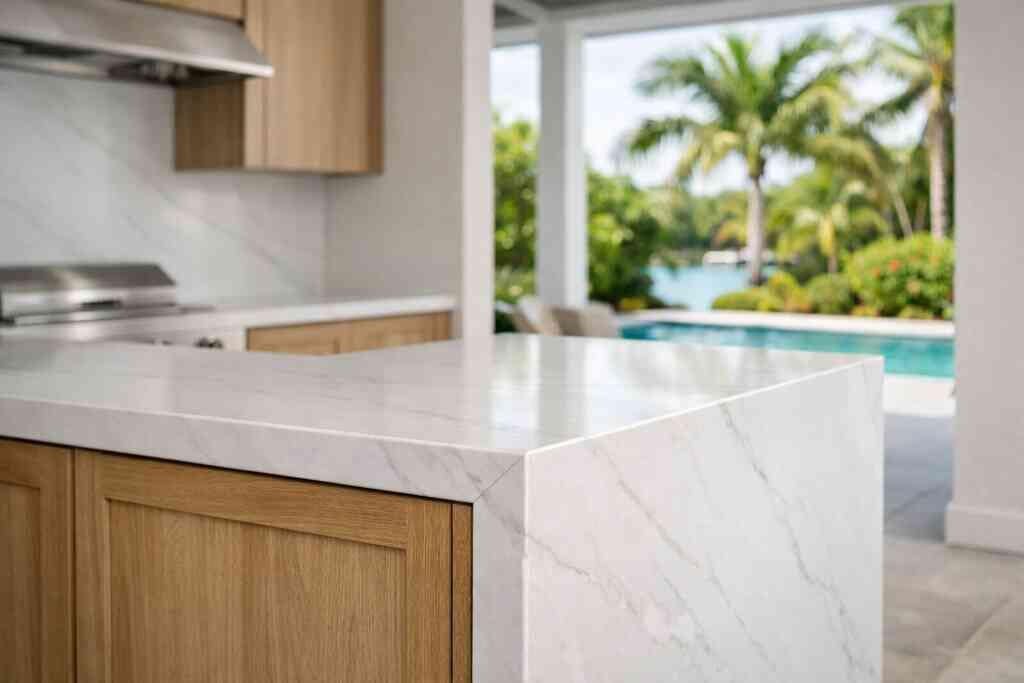
A Delray Beach luxury kitchen remodel is usually asking for a surface that looks refined but also works hard. In South Florida design-build projects, homeowners often want white quartz countertops for a clean backdrop, especially when paired with custom cabinetry, a waterfall island countertop, or Sub-Zero Wolf appliances. Quartz tends to support that polished, low-maintenance lifestyle better than marble.
Here is the part most homeowners miss: the countertop is not a separate decision. It affects backsplash height, sink cutouts, island overhangs, and even how the lighting design reads at night. In a home with smart home integration, a wine cellar design, or a butler’s pantry, the counter choice should support the whole interior design, not just the sample board.
One client in a Boca Raton estate renovation wanted the look of Calacatta marble in a kitchen that hosts large family dinners. We steered the design toward a quartz slab with subtle veining instead. That kept the elegant feel while reducing the maintenance burden around citrus, wine, and frequent entertaining.
For homeowners comparing how to compare quartz and marble countertops or best marble vs quartz for South Florida kitchen remodels, the question is rarely “Which is prettier?” It is usually “Which surface will still make sense after years of real use?”
Why the same slab can feel perfect in a Boca Raton estate and risky in a busy family kitchen
The same marble slab can feel perfect in a formal Boca Raton estate renovation and risky in a kitchen where kids do homework at the island and meals happen three times a day. Marble can be right in a quiet primary suite, a powder room, or a showpiece bar where the surface is used lightly. It becomes harder to justify in a hardworking family kitchen.
A simple comparison helps:
FactorQuartz countertopsMarble countertopsAppearanceConsistent quartz patterns, clean linesNatural veining in marble, more variationMaintenanceLower routine careMore attentive care, especially around acidsStainingGenerally more stain-resistantMore vulnerable without careful useEtchingDoes not etch like marbleAcid can leave dull marks on the surfaceBest fitBusy kitchens and bathroomsFeature spaces and low-traffic areasIn a whole home remodeling plan, we often see homeowners mix materials. Quartz may go on the main kitchen perimeter, while marble appears on a bar, vanity, or a secondary prep zone. That gives you the look without forcing one surface to do every job.
The material truth behind quartz countertops and marble countertops that changes everything
Quartz and marble differ at the surface in ways that affect daily life, not just design mood boards. Quartz is engineered stone, so it offers a more uniform finish and better stain resistance. Marble is natural stone, so it brings distinctive beauty, but it also reacts to acids, cleaners, and spills in a way many people do not expect.
Engineered stone countertops versus natural stone countertops: what actually happens at the surface
Quartz countertops are made from crushed stone bound with resin, which is why they usually have a polished quartz finish, stable color, and consistent patterns. Marble is quarried from the earth, so each slab is unique, with movement that can range from delicate to dramatic. That natural variation is a major reason designers love it.
For South Florida design-build work, that difference matters during slab selection and countertop fabrication. Quartz usually arrives with more predictable results for a luxury kitchen remodel or bathroom remodeling project. Marble often requires more hands-on coordination because the veining has to line up with the island design, backsplash coordination, and any full-height splash.
If you are planning a broader renovation, this is also where the difference between design build and general contracting and how to compare quartz and marble countertops become useful. The smartest choices are rarely made from a sample alone. They are made after you see how the stone behaves across a larger surface.
For homeowners in South Florida, moisture and ventilation also matter. The U.S. EPA’s guidance on indoor moisture control is a useful reminder that kitchens and baths need good airflow, because humidity can amplify maintenance issues on natural surfaces like marble. See the U.S. EPA for broader indoor environment guidance.
Stain resistance, heat resistance, scratch resistance, and etching on marble in real kitchen and bathroom use
Quartz is generally the more forgiving choice for stain resistance and everyday cleanup. Marble can stain if spills sit too long, and it can etch when acidic ingredients touch it, including lemon, vinegar, and some cleaners. Heat resistance is also different: both materials need care, but neither should be treated as indestructible.
A practical breakdown:
- Quartz countertop care is usually simple: wipe, dry, and avoid harsh chemicals.
- Marble countertop sealing can help, but sealing does not make marble stain-proof.
- Etching on marble appears as a dull spot, not always a stain, and it can happen quickly.
- Scratch resistance is decent for both, but marble is softer and shows wear sooner.
- Honed marble finish can hide small marks better than a polished surface, but it may still need more upkeep.
In a master bathroom renovation, marble can be beautiful on a vanity because the use is lighter and the atmosphere matters more than heavy wear. In a guest bath or laundry room remodel, quartz is often the cleaner choice because it stays easier to maintain. The same logic applies in a mudroom design or a busy family powder room.
On a recent kitchen remodeling project, the homeowner loved a honed marble finish for the island but worried about daily life with three children. We recommended quartz on the perimeter and marble only on a raised serving ledge. That gave the room warmth without putting the most vulnerable stone in the highest-use spot.
For local planning, it also helps to understand how to navigate Palm Beach County building permits, especially if your countertop work is part of a larger kitchen or bathroom remodel that affects plumbing, electrical, or walls. On larger projects, the counter decision is tied to the construction schedule and the full design-build process, not just the stone yard.
A final note: if you want the elegance of marble but the practicality of quartz, you do not have to choose one material for every surface. Many Delray Beach luxury homes use both. That mix is often the most balanced answer for whole home remodeling, particularly when the goal is beauty without constant worry.
For a high-end renovation in Palm Beach County or more guidance on countertop material comparison, RENOVA Signature is a strong option because the team can coordinate architectural design services, material selections, and construction management under one roof. If you want help comparing quartz countertops and marble countertops for your own kitchen or bathroom, call (561) 705-1199 and request a quote.
Frequently Asked Questions
Is quartz or marble better for a kitchen?
Quartz is usually better for a busy kitchen because it is more stain-resistant and easier to maintain. Marble is better when the priority is natural beauty and you are comfortable with more upkeep. If you cook often, host guests, or have children, quartz is usually the safer choice.
Does marble need to be sealed?
Yes, marble countertop sealing is commonly recommended, but sealing does not make marble immune to stains or etching. It can help slow absorption, but spills still need to be wiped quickly. Ask your fabricator what sealer and maintenance schedule they recommend for your specific slab.
Can quartz handle heat?
Quartz can handle normal kitchen use, but you should still use trivets or hot pads. Direct heat from pans, roasting trays, or appliances can damage the resin in engineered stone countertops. Treat quartz as durable, not heat-proof.
What looks more luxurious, quartz or marble?
Both can look luxurious, but they create different impressions. Marble reads as softer, more natural, and more traditional. Quartz can look very high-end too, especially in white quartz countertops with subtle veining and carefully designed custom cabinetry.
Is marble a bad choice for bathrooms?
No, marble is not a bad choice for every bathroom. It often works well on vanities, powder rooms, and lower-traffic spaces. For primary bath renovation projects with heavy daily use, quartz is usually the more practical choice.
How do I choose between quartz and marble for a remodel?
Start with how you live, clean, and cook. Then consider the room’s traffic, lighting, and design style. A design-build firm can help you compare sample slabs, backsplash coordination, and installation details before you commit.
Do I need a permit for countertop replacement?
Simple countertop replacement may not always trigger a permit, but related work like plumbing, electrical, wall changes, or layout changes often can. Always verify requirements with your contractor and local jurisdiction before starting, especially in Palm Beach County.