-
Why smart home features fail custom homes when the wiring gets decided too late
If you are reading this because your custom home plan feels crowded with “smart” ideas, take a breath. That stress is normal. The problem is rarely the technology itself. It is usually the timing. When wiring, device placement, and control logic come too late, the house starts arguing with the design instead of supporting it.
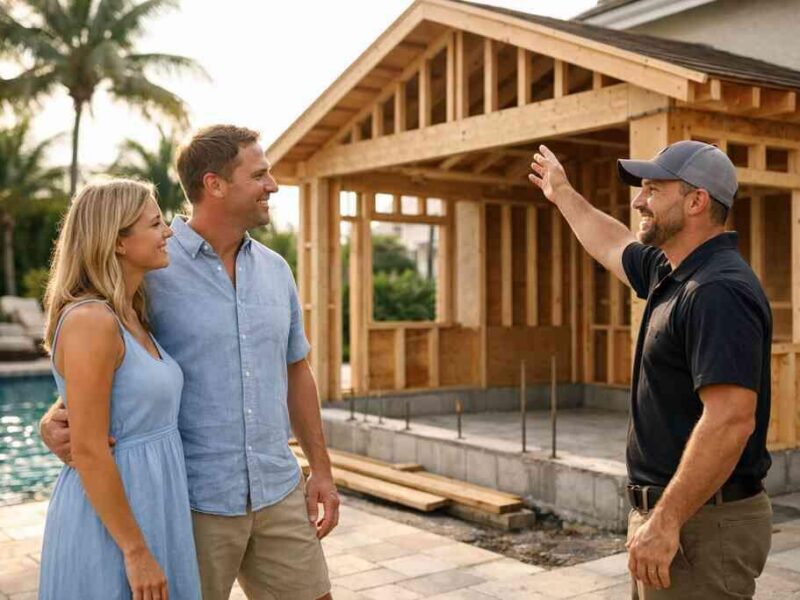
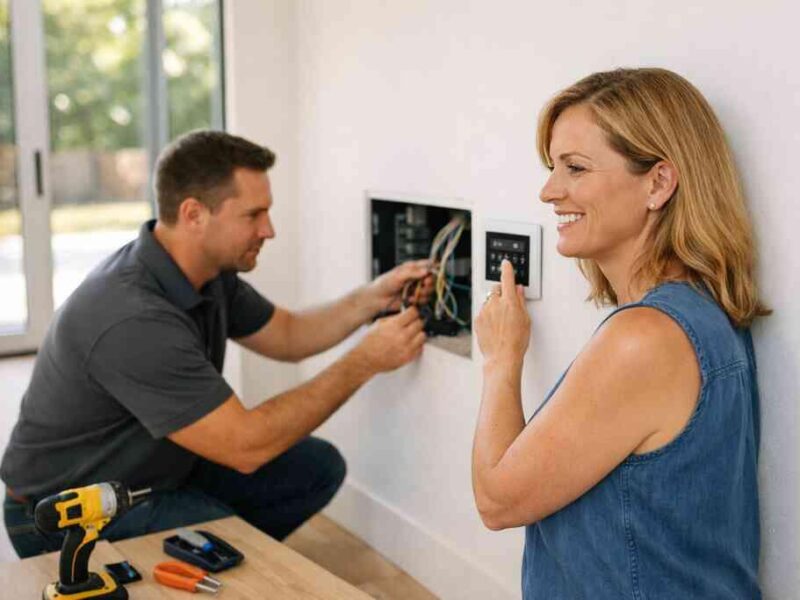
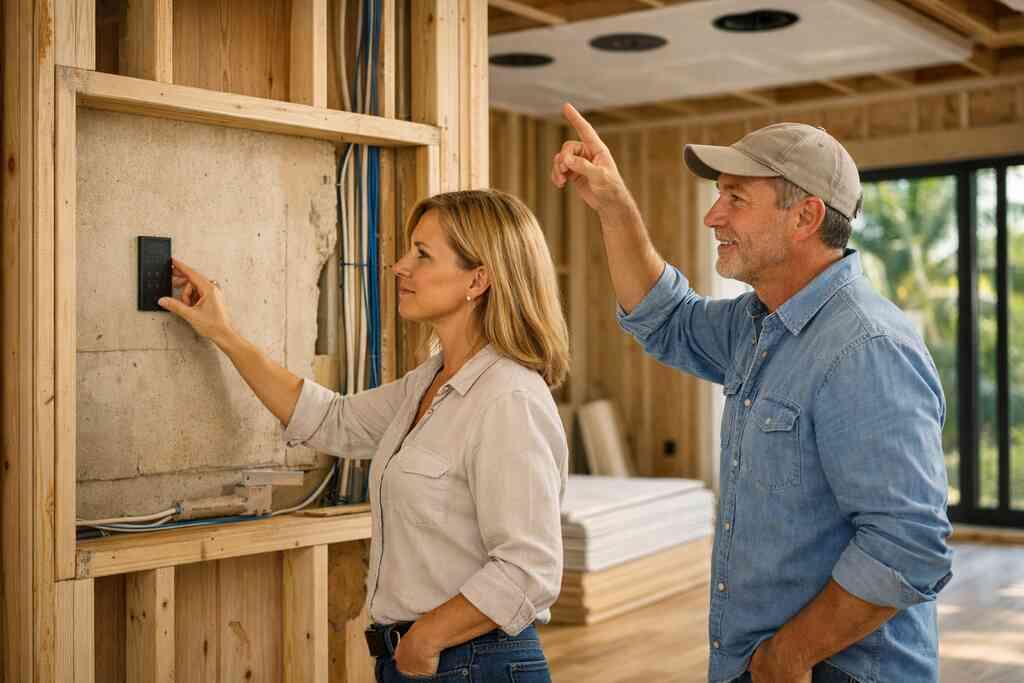
What a custom home builder should plan before drywall goes up
A custom home builder should map smart systems before framing closes, not after finishes begin. That includes low-voltage paths, panel locations, device clearances, and network needs. It also means deciding where you want visible controls and where you want nothing visible at all. In a design build firm, those decisions work best when the architectural, electrical, and interior design teams coordinate early.
We see this most often in luxury home renovation projects where the owner wants a clean ceiling, hidden speakers, and layered lighting. If that planning waits until drywall, someone has to compromise. Usually, it is the ceiling detail or the cabinetry. Sometimes it is both. That is why custom home automation planning for luxury renovations in Delray Beach should happen alongside the floor plan, not after it.
Which whole home automation decisions affect architectural design services and 3D rendering
A surprising number of smart features affect the drawing set. Whole home automation can change switch locations, wall thicknesses, millwork reveals, and even ceiling symmetry. Architectural design services must account for control panels, sensor zones, speaker pockets, and equipment closets. When we build 3D rendering studies, we often test whether the room still feels balanced once the technology is in place.
One couple in Palm Beach County wanted concealed shades, flush wall keypads, and a media room with no visible equipment. That sounded simple. It was not. We shifted a cabinet chase, adjusted a ceiling soffit, and reworked lighting zones so the room stayed elegant. That is the part most homeowners miss: the best smart home systems are usually the least visible.
How Delray Beach and Palm Beach County homes handle heat, humidity, and hurricane-resistant construction
South Florida changes the equation. Heat, humidity, salt air, and storm planning all affect smart devices. Hurricane-resistant construction matters because a house that performs well in bad weather still needs systems that survive power interruptions and moisture exposure. In Delray Beach, Boca Raton, and Gulf Stream, you also need to think about impact windows and doors, equipment ventilation, and stable internet infrastructure.
We have found that smart home integration for custom homes in South Florida works best when it respects the climate first. Humidity can shorten the life of poorly placed equipment. Coastal conditions can be rough on exterior sensors and outdoor controls. So the smartest approach is not more gadgets. It is better placement, better planning, and a calmer system design.
Where building permits Palm Beach County can affect smart home integration and Florida building code coordination
This is where homeowners get frustrated. Building permits Palm Beach County can affect lighting, security rough-ins, low-voltage routing, and equipment placement, especially in additions or major remodels. You do not want to discover code issues after finishes are ordered. You also do not want to assume a device layout will pass review just because it worked in a previous state. Florida building code coordination matters, especially when the project touches structure, fire systems, energy controls, or storm-related elements.
Here is the practical rule: if a smart feature depends on concealed wiring, structural changes, or integrated controls, it should be reviewed early. That keeps the design cleaner and the schedule steadier. It also reduces rework, which is always the expensive part. For owners considering custom homes in Delray Beach and Boca Raton, that early coordination is often the difference between elegant and awkward.
-
The five smart home systems that actually change daily life in a luxury home
Most people think smart homes are about convenience alone. That is only half the story. The best systems change how your house feels hour by hour. They also reduce friction in daily routines. In a luxury home, that quiet ease is often the real value.
Whole home automation that ties lighting, climate, audio, and security into one app-based home control system
The first feature worth prioritizing is whole home automation with a clean control structure. One interface should handle lighting, climate, audio, shades, and integrated security systems with remote home monitoring. That does not mean everything must be fully automated from day one. It means the system can grow without tearing the house apart later. An app-based home control platform keeps the experience simple for everyone in the home.
On the projects we have finished this year, clients respond best when the controls match their daily routines. Morning scenes, away modes, and evening settings reduce the constant small decisions that wear people down. You may not notice the system after a week, and that is a compliment. If it is doing its job, the house just works.
Smart lighting design and motorized window treatments that shift the feel of a room from morning to night
Lighting is where design and comfort meet. Smart lighting design lets you layer task light, accent light, and ambient light without crowding the wall with switches. Add motorized window treatments, and the room changes with the sun instead of fighting it. That matters in South Florida, where glare can be harsh and afternoon heat can change the mood of a room fast.
A recent kitchen project in Delray Beach used warm under-cabinet lighting, dimmable pendants, and hidden shade pockets. The space felt sharper in the morning and softer in the evening. That is not a small thing. It is the difference between a room that photographs well and a room that lives well.
For homeowners exploring smart lighting design and motorized window treatments for luxury homes, this is the feature that usually gives the quickest emotional payoff. It is also one of the easiest systems to coordinate during renovation. When paired with interior design, it can make even a large house feel calm instead of busy.
Integrated security systems with remote home monitoring and biometric access control for privacy
Privacy matters more than most people say out loud. Integrated security systems with remote home monitoring give you visibility without forcing you to babysit your house. Add biometric access control at a primary entry, private suite, or guest wing, and you can separate convenience from exposure. That is especially helpful in larger homes with staff access, visiting family, or separate quarters.
The best security systems should feel discreet. Cameras should not dominate the elevation. Keypads should not interrupt a millwork feature. And the monitoring should be simple enough that you actually use it. If you want a deeper look, integrated security systems with remote home monitoring should always be planned with the floor plan, not bolted on afterward.
Automated climate control and energy management systems that keep comfort steady without wasted use
South Florida homes need stable comfort. Automated climate control and energy management systems help you maintain it without constant manual adjustments. Smart thermostats can learn patterns, but the bigger win is zoning. Separate areas can cool differently based on use, sun exposure, and occupancy. That improves comfort and can reduce waste.
The smartest systems also watch how the home actually behaves. Occupancy sensors, shade controls, and schedule-based logic keep the equipment from working harder than necessary. We have seen that approach fit especially well in larger Delray Beach and Boca Raton residences where rooms are not used evenly. For owners comparing options, automated climate control and energy management systems usually rank high because they pay you back in comfort every day.
Whole-home audio and home theater installation that disappears into the architecture instead of taking it over
The fifth feature is often the most underestimated. Whole-home audio and home theater installation can either feel seamless or feel like equipment took over the house. The goal is integration. Speakers should disappear into ceilings or custom wall details. Screens should fit the room proportionally. Equipment should live where it can breathe, but not where you stare at it.
A good media space feels intentional, not flashy. That means planning acoustics, wiring, ventilation, and seating before finishes are selected. It also means coordinating with millwork, trim, and lighting so the room still feels like part of the home. If you are planning whole-home audio and home theater installation in custom homes, this is one area where early design saves a lot of regret later.
-
Why the kitchen is usually the smartest place to start
The kitchen is where people feel smart-home features every single day. It is also where mistakes show fastest. A poor outlet layout, clumsy lighting plan, or awkward appliance panel can make even a beautiful renovation feel unfinished. That is why many homeowners start here when they want technology to feel useful, not gimmicky.
Smart kitchen technology that makes a luxury kitchen remodel feel easier to live in every day
A luxury kitchen remodel becomes easier to live in when technology supports the workflow. Touchless faucets, connected ovens, app alerts, charging drawers, and scene-based lighting can all help. Still, the best upgrade is rarely the loudest one. It is the one that removes friction while keeping the kitchen visually calm.
During a recent remodel, the homeowner wanted a space that looked polished but handled weekday chaos. We combined concealed charging, task lighting, and appliance placement around their habits, not a trend board. That made the room faster to use and easier to clean. For a deeper planning lens, smart kitchen technology for a luxury kitchen remodel should always be paired with layout thinking.
How Sub-Zero Wolf appliances, custom cabinetry, and lighting design work together in a design build firm project
In a design build firm project, appliances and cabinetry must be treated as one system. Sub-Zero Wolf appliances are often selected for performance and fit, but they also influence venting, clearances, and surrounding millwork. Custom cabinetry can hide panels, create appliance garages, and support a cleaner sightline. Then lighting design finishes the room by making those details readable without overexposing them. Here is the part most homeowners miss. If the appliance package is chosen before the cabinet shop is involved, the room can drift. Door swings, panel depths, and service access all matter. So do electrical and ventilation needs. A good design-build process keeps those choices aligned from the start. ### What to think through before adding voice-controlled home systems to cooking and entertaining spaces
Voice-controlled home systems sound appealing until they start answering in the middle of a dinner party. The trick is to use voice control where it helps, not where it distracts. In kitchens and entertaining spaces, that usually means lighting, music, and maybe shades. It does not mean every function needs a spoken command.
You should also think about privacy, noise, and redundancy. Manual controls still matter when guests are over or the internet acts up. That is why a layered approach works best. Voice, app, and hardwired controls should all exist together, even if you use them differently. For families who cook often, that balance makes the room feel modern without feeling theatrical.
How kitchen remodeling choices connect to whole home remodeling and future resale value in Delray Beach luxury homes
A kitchen rarely lives alone. Kitchen remodeling choices should match the rest of the house, especially in whole home remodeling projects. If the kitchen feels ultra-modern but the nearby rooms are traditional, the house can feel fragmented. In Delray Beach luxury homes, that consistency matters to both daily life and resale appeal.
We often see strong results when kitchen technology is integrated quietly and the overall style stays timeless. That can support future buyers who want both beauty and practicality. It also helps if the rest of the home can eventually accept the same system logic. If you are planning for that kind of flexibility, your layout matters as much as the finishes.
-
The rooms most people forget but use every single day
The most overlooked smart features are often the ones you touch first thing in the morning and last thing at night. Bathrooms, entries, guest areas, offices, and laundry rooms all benefit from thoughtful automation. These spaces do not need a heavy-tech look. They need calm, dependable support.
Smart bathroom features for a master bathroom renovation that feels calm, private, and simple to use
A master bathroom renovation is a natural place for quiet technology. Heated floors, humidity-sensing ventilation, mirror defogging, scene lighting, and leak detection all make daily life easier. Add privacy controls and you can make the room feel more restful without making it feel busy. Smart bathroom features should support a spa-like mood, not interrupt it.
We often recommend keeping controls simple in these rooms. A morning scene, an evening scene, and a cleaning mode may be enough. That keeps the experience intuitive for everyone. For homeowners comparing upgrades, smart bathroom features for a master bathroom renovation work best when the finish palette stays elegant and the controls stay hidden.
Aging-in-place remodeling and universal design choices that still look refined in a custom home
Aging-in-place remodeling does not have to look clinical. In fact, the best universal design choices are almost invisible. Wider clearances, lever hardware, barrier-free showers, smart lighting, and intuitive controls can all support long-term use. The goal is independence without making the home feel like a care facility.
This matters in South Florida, where many families want flexibility for multiple generations. We see clients plan for the future while still wanting a refined, custom look. That is completely reasonable. Good design can handle both. The key is choosing details that feel timeless now and practical later.
Smart entry systems and remote home monitoring for a guest house addition, in-law suite, or garage addition
Additions need security that respects privacy. A guest house addition, in-law suite, or garage addition may need separate entry control, notification settings, and remote access. Smart entry systems let you manage those areas without handing out too many keys. They are also useful when family members visit often or when a space is used intermittently.
One project in Palm Beach County included a detached suite and a small office above the garage. The owners wanted simple access for guests and clear control from the main house. We used separate entry logic and monitoring zones so the spaces stayed connected but private. That kind of planning is especially helpful in Palm Beach County home construction where additions often carry their own code and access considerations.
Home office addition and laundry room remodel ideas that benefit from custom home automation without feeling overdone
A home office addition benefits from network stability, lighting scenes, and climate control more than flashy gadgets. A laundry room remodel benefits from leak alerts, better task lighting, and small automation features that reduce hassle. These are not showpiece rooms, but they shape your day. That makes them worth planning carefully.
If you want these spaces to stay discreet, keep the tech functional and hidden. Use clean cabinetry, simple controls, and predictable scenes. That way the room feels organized instead of overdesigned. It is a quiet kind of luxury, and it ages well.
-
How to decide what belongs in your home now and what can wait
Not every smart feature needs to happen at once. That is good news. The right plan gives you room to phase the work without compromising the architecture. The wrong plan forces you to rebuild things you already finished.
The difference between must-have smart home integration and nice-to-have upgrades in a custom home plan
Start with the features that affect structure, wiring, and daily use. Those are the must-have items. After that, layer in convenience features that can be added later. This is the cleanest way to separate smart home integration from wish-list extras in a custom home plan.
A simple rule helps. If a feature changes wall layout, power, or accessibility, plan it now. If it only changes convenience, it may wait. That keeps the project grounded. It also helps the homeowner make better choices without feeling rushed.
How construction management, interior design, and millwork molding coordination keep the system elegant and discreet
Construction management matters because smart systems touch many trades. Interior design matters because the controls must fit the room. Millwork molding matters because hidden technology still needs a place to live. When those pieces align, the result feels refined rather than loaded with equipment.
We have seen projects improve dramatically when the cabinetmaker, electrician, and designer review the same plan. It reduces conflicts. It also keeps the final look calmer. For homeowners who want a coordinated process, custom home automation and construction management is where the real efficiency begins.
Where home renovation financing and a renovation cost calculator Delray Beach can help you prioritize phases
Big projects become easier when you phase them well. Home renovation financing can help you build the most important systems first. A renovation cost calculator Delray Beach can also help you sort needs from wants before you commit. That is not about chasing a number. It is about shaping the order of work so the house improves intelligently.
If your budget does not cover everything, start with wiring, core controls, and infrastructure. Then add the visible features later. This keeps the house ready for future upgrades without trapping you in the wrong sequence. Financing should support good planning, not replace it.
What a thoughtful next move looks like for South Florida design-build projects in Boca Raton, Gulf Stream, and beyond
For South Florida design-build work, the best next move is usually a planning meeting that includes the builder, designer, and technology team together. That is especially true in Boca Raton estate renovation and Gulf Stream projects, where architecture and lifestyle both matter. The goal is not to buy every smart feature. It is to choose the ones that fit your life and your house.
If you are starting now, gather three things: a list of frustrations, a list of must-haves, and a list of spaces you use most. Then talk with a firm that understands how smart systems fit into the whole house, not just the gadget layer. You do not have to solve everything today. Start with one careful conversation with RENOVA Signature, and let the plan catch up to your ambitions.
“RENOVA is Awesome – The Best of The Best!! Faced with the decision to buy a bigger home or remodel to accommodate our family, we chose to remodel and Todd and his team exceeded every expectation; on time, on budget, and a breathtaking result. Our story began by hiring a contractor other than RENOVA. After hearing why we couldn’t do things, and why everything was a problem, we turned to RENOVA. All of our no’s went to an immediate yes with designs to fit our aspirations for a new transitional kitchen, transforming our bathroom to a new laundry room, and designing a powder room with lots of wow factor. RENOVA did it all – Design, Build, accommodate every additional request, always with a smile, and always doing everything beyond expectations – A true one-stop shop. In transforming our home, RENOVA did everything and all the while minimizing the discomfort of construction to my family. If I were to sum it up, RENOVA’s biggest asset are their people, Project Team Leaders are like part of your family, caring, attentive, accommodating, and always finding a way to ensure your satisfaction. And talk about the ‘A” Team – we had Danny as Project Manager, with team members Brad and Brandon. RENOVA even designed and custom built a potty box for our cats in the garage complete with ventilation and a timer. There is nothing these guys can’t do. As our new kitchen, laundry room, and new bathroom is completed we have hired RENOVA again to remodel our Master Bathroom, Closets throughout the house, Garage, and remodel our Foyer with new stone and trim. We just couldn’t say goodbye ;-)”- Matthew, a 5 star review from our business on Google Business Reviews
Frequently Asked Questions
Question: How does RENOVA Signature approach smart home integration in a luxury home renovation or custom home builder project?
Answer: RENOVA Signature approaches smart home integration as part of the full design-build process, not as an afterthought. Because the firm handles architectural design services, 3D rendering, interior design, permitting coordination, and construction management under one roof, smart systems can be planned early and integrated cleanly into the home’s layout. That matters in a custom home builder workflow, where wiring paths, equipment locations, wall finishes, and control placement all need to work together before drywall closes. The result is a smarter home that feels elegant, intuitive, and visually calm rather than crowded with visible devices.
Question: What are the top smart home integration features RENOVA Signature recommends for the blog title Best 5 Smart Home Integration Features for Custom Homes 2026?
Answer: The features that usually deliver the most value are whole home automation, smart lighting design, motorized window treatments, integrated security systems with remote home monitoring, and automated climate control. In many luxury home renovation and whole home remodeling projects, these systems improve comfort every day while keeping the architecture clean. RENOVA Signature also helps clients think about smart kitchen technology, smart bathroom features, whole-home audio, and home theater installation when those spaces are part of the plan. The key is choosing features that genuinely improve daily life and coordinating them with interior design, custom cabinetry, and lighting design so they feel built in from the start.
Question: How does RENOVA Signature coordinate smart home automation with building permits Palm Beach County and Florida building code requirements?
Answer: Smart home automation often intersects with electrical routing, low-voltage planning, security wiring, equipment placement, and sometimes structural or energy-related work, so permit and code review should happen early. RENOVA Signature’s design-build model helps keep that process organized by coordinating the right details before construction begins and making sure the project stays aligned with building permits Palm Beach County and Florida building code requirements. Because regulations can vary based on scope and location, the firm does not assume a one-size-fits-all approach. Instead, it reviews the project carefully, confirms what needs approval, and keeps the homeowner informed throughout the process. That attention to detail helps reduce surprises and supports a smoother renovation or custom home project.
Question: Can RENOVA Signature integrate smart kitchen technology into a luxury kitchen remodel with Sub-Zero Wolf appliances and custom cabinetry?
Answer: Yes. RENOVA Signature regularly plans luxury kitchen remodels around the relationship between appliances, cabinetry, lighting, and workflow. Smart kitchen technology works best when it supports the way the family actually uses the space, whether that means connected appliances, task lighting, concealed charging, or scene-based controls. Sub-Zero Wolf appliances, custom cabinetry, and lighting design need to be coordinated early so clearances, ventilation, paneling, and access all work properly. In a design build firm environment, that coordination is much easier because the team is managing the room as one system rather than as separate trades. The goal is a kitchen that looks refined, functions efficiently, and feels easy to live in every day.
Question: Does RENOVA Signature plan smart features for home additions like a guest house addition, in-law suite, garage addition, or home office addition?
Answer: Yes, and those spaces often benefit greatly from thoughtful smart home integration. A guest house addition, in-law suite, garage addition, or home office addition may need separate entry control, app-based home control, remote home monitoring, climate zoning, and lighting scenes that can operate independently from the main home. RENOVA Signature can coordinate those features within the broader whole home automation strategy so the addition feels connected but still private and flexible. This is especially useful in South Florida design-build projects where family needs, privacy, and long-term usability all matter. The firm also considers aging-in-place remodeling and universal design when appropriate, so the space can remain practical well into the future.
Question: Why do Delray Beach luxury homes and Boca Raton estate renovation projects need special planning for smart home integration, outdoor living spaces, and hurricane-resistant construction?
Answer: South Florida homes face unique design demands, including heat, humidity, salt air, storm preparedness, and the need to blend indoor and outdoor living spaces smoothly. In Delray Beach luxury homes, Boca Raton estate renovation projects, and other coastal properties, smart systems need to be planned with hurricane-resistant construction, impact windows and doors, and reliable infrastructure in mind. That can affect exterior sensors, landscape lighting automation, pool and spa control, outdoor kitchen BBQ areas, and even how equipment is ventilated or protected. RENOVA Signature also coordinates these decisions with interior design, landscape architecture, pool and spa design, and construction management so the full property works as one cohesive environment. When handled carefully, smart home integration supports both comfort and resilience without compromising the home’s architecture.