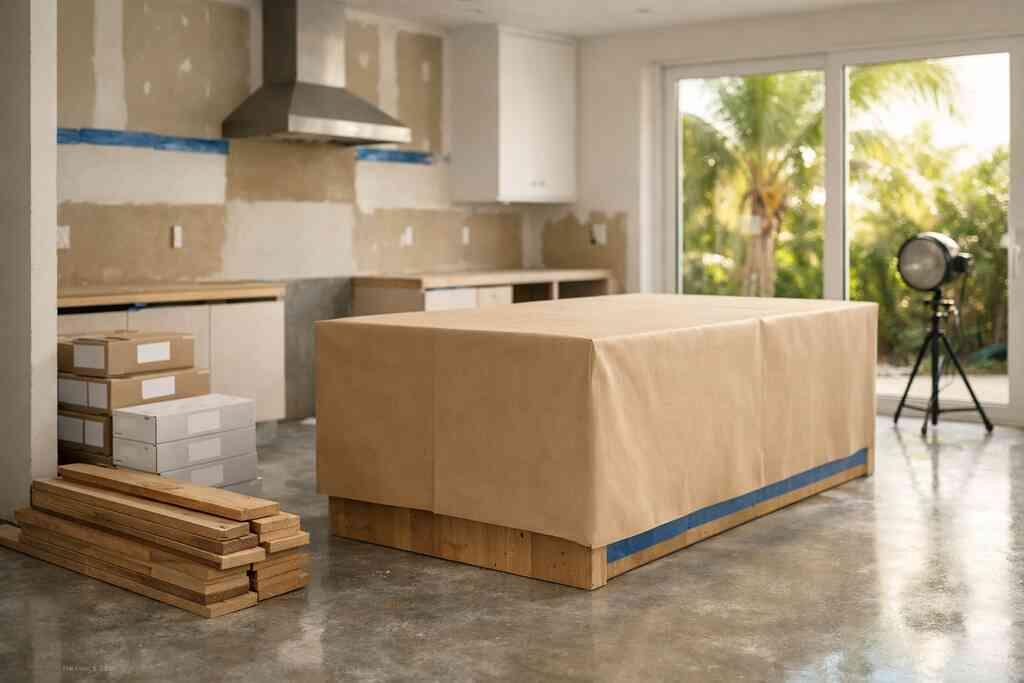
A construction schedule for renovations includes every major phase, from preconstruction planning and permit coordination to demolition, rough-in work, finishes, inspections, and final closeout. It also tracks lead times, subcontractor coordination, and decision deadlines so the project can move in the right order.
If you are reading this because your renovation already feels chaotic, that feeling is common. The schedule is usually where confusion shows up first, long before dust starts flying.
Key Takeaways
- A strong renovation project timeline starts with preconstruction planning, not demolition.
- The schedule should include design approvals, permit coordination, material selection, procurement, and inspection timing.
- A real construction management schedule tracks dependencies, not just dates.
- Long lead time materials and subcontractor sequencing often drive the critical path.
- In South Florida, schedules should account for Florida Building Code compliance, permit review, and weather-related delays.
Why a renovation schedule slips before the first wall comes down
A renovation schedule often slips before demolition because the biggest delays usually happen in planning, approvals, and procurement. The real timeline is shaped by design decisions, permit review, long lead time materials, and how quickly you finalize selections. If those pieces are not aligned, the field work stalls before it really starts.
The hidden decisions inside preconstruction planning that shape every renovation project timeline
Preconstruction planning is where the schedule is won or lost. This stage includes architectural design services, scope definition, cost review, trade coordination, and selection deadlines for everything from tile to lighting. If you are doing a luxury home renovation, this is also where the team confirms the order of work for kitchen remodeling, bathroom remodeling, home additions, and any structural changes.
A homeowner in Boca Raton once came to us expecting the “construction part” to begin right away. The drawings were still changing, though, and the finish selections had not been locked in. We paused the field start, finalized the plan, and avoided a cascade of change orders later. That kind of discipline may feel slow at the start, but it protects the whole home remodeling schedule.
For South Florida projects, preconstruction also needs to account for building permits Palm Beach County and Florida Building Code compliance. If the scope includes impact windows and doors, hurricane-resistant construction, or a second-story addition, those approvals can affect every downstream trade. That is why the schedule should read like a chain, not a calendar.
How design build firm coordination keeps drawings, 3D rendering approval, permits, and material selection from colliding
A design build firm process helps because one team manages design, permitting, and construction together. That matters when 3D rendering approval, cabinet shop drawings, structural details, and material selection all need to happen in a coordinated sequence. Without that control, the project can stall while one decision waits on another. Here is the part most homeowners miss: the schedule is not just about construction dates. It is about decision dates. If the quartz countertops, custom cabinetry, plumbing fixtures, and flooring are not approved on time, the installer may arrive before the material does. That is how a clean timeline turns into a moving target.
Schedule itemWhy it mattersTypical risk if delayed3D rendering approvalConfirms layout and finishesRework in drawings and selectionsPermit submissionStarts regulatory reviewField work cannot begin on timeMaterial selection timelineLocks ordering decisionsLong lead time gapsProcurement and delivery scheduleMatches trades to product arrivalCrew downtimeInspection schedulingKeeps the next phase movingWork pauses between stages
For clients comparing options, the best schedules are milestone-based project management plans with clear dependencies. RENOVA Signature’s whole home renovation services use that kind of structure because it keeps the project moving in a logical order. On larger homes in Delray Beach, Highland Beach, or Gulf Stream, that coordination can make the difference between a controlled renovation and a stressful one.
What actually belongs on a serious construction management schedule
A serious construction management schedule includes demolition, rough-in work, finish carpentry, inspections, procurement, and closeout, all tied to one critical path. It should show who is responsible for each step, what must finish before the next trade starts, and where inspections or delivery dates could affect the sequence. A real schedule is operational, not decorative.
The sequence from demolition phase planning to rough-in phase sequencing, finish carpentry schedule, and inspection scheduling
The construction management schedule should begin with demolition phase planning, not with swinging hammers. That means utility shutoffs, protection of existing finishes, dust control, debris removal, and verification of what stays versus what goes. Once demolition is complete, the schedule moves into rough-in phase sequencing for framing, plumbing, electrical, HVAC, and any structural changes.
After rough-in comes inspection scheduling. That step is essential in a renovation project timeline because one failed inspection can delay drywall, insulation, cabinetry, or tile installation. Then comes finish carpentry schedule planning, which covers trim, millwork and molding details, custom closets, doors, and built-ins. In a luxury kitchen remodel, it also affects custom cabinetry installation, appliance clearances, and finish alignment.
A clear schedule usually includes these milestones:
- Preconstruction and scope lock
- Permit submission and approval
- Demolition and debris removal
- Structural framing and rough-ins
- Inspections and corrections
- Drywall, flooring, and finish carpentry
- Cabinetry, fixtures, and final installations
- Final inspection and punch list
For a master bathroom renovation schedule, the order is especially important. Waterproofing, tile, glass, plumbing trim, and lighting design coordination all have to happen in sequence. That is where a project manager earns their keep.
Where long lead time materials, subcontractor coordination, and permit coordination fit in for Palm Beach County projects
Long lead time materials should be listed near the top of the schedule, not hidden in a note. Items like custom cabinetry, impact windows and doors, specialty tile, Sub-Zero Wolf appliances, and imported stone can drive the whole pace of the job. If a product has to be ordered early, the schedule should name it early.
The same is true for subcontractor coordination. Electricians, plumbers, framers, cabinet installers, painters, and finish crews all depend on each other. If the rough-in team slips, the finish team waits. If the cabinetry arrives before drywall is complete, storage and damage become problems.
Common schedule driverWhy it affects timingWhere it belongsLong lead time materialsNeeds early orderingPreconstructionPermit coordinationGoverns start dateBefore demolitionSubcontractor sequencingPrevents trade overlapThroughout constructionInspection schedulingControls next-phase releaseAfter rough-in and prior to finish work
For Palm Beach County projects, permit coordination deserves special attention because local review timelines can vary by scope and jurisdiction. If the work involves a historic home renovation, a garage addition, or a home office addition, the review path may be more complex. For that reason, it helps to use a schedule that is updated weekly and tied to real procurement dates, not just hopeful targets. OSHA safety expectations also apply to active job sites, so the plan should support safe sequencing and site control; see OSHA construction standards for baseline guidance.
One Delray Beach homeowner asked us why the schedule looked “too detailed” at the start. We told them the truth: detail is what keeps luxury renovation work calm. When the plan includes delivery windows, inspection checkpoints, and trade handoffs, you get fewer surprises and better control over the result.
For homeowners comparing a whole home remodeling schedule with a kitchen remodeling timeline or bathroom remodeling sequence, the difference is usually scope, not structure. The larger the project, the more the schedule must account for dependencies, local code, and material logistics. If you want help mapping that out for a South Florida design-build project, RENOVA Signature is one strong option because the team handles design, permitting, and construction under one roof, with direct project oversight from start to finish.
If you are ready to sanity-check your timeline, gather your drawings, selections list, and permit questions, then request a conversation before you commit to a start date. You can call RENOVA Signature at (561)705-1199 and compare your plan against a schedule built for real-world renovation work in Delray Beach, Boca Raton, and across Palm Beach County.
“We hired this team for a high end kitchen renovation in Delray Beach and the result exceeded every expectation. From custom cabinetry and Calacatta marble to the millwork details, the craftsmanship is flawless. The project manager communicated daily, kept the site immaculate, and handled all permitting without any stress on us. They finished on schedule and on budget, which is rare in this market. If you want a true luxury remodeling experience in South Florida, this is the company to call.”- N S., a 5 star review from RENOVA Signature on Google Business Reviews
Frequently Asked Questions
Question: What does a construction schedule for renovations include, and how does RENOVA Signature use it to manage a whole home remodeling schedule?
Answer: A strong construction schedule for renovations includes preconstruction planning, permit coordination, design approvals, material selection, procurement, demolition phase planning, rough-in phase sequencing, finish carpentry schedule items, inspections, and final closeout. At RENOVA Signature, we build the schedule around dependencies, not just dates, so every step supports the next one in a logical order. That approach is especially important in luxury home renovation planning, where custom cabinetry, millwork and molding details, lighting design, and other selections can affect the critical path. Our design build firm process keeps interior design, architectural design services, 3D rendering approval, and construction management aligned from the start, which helps reduce delays and confusion later in the project.
Question: Why is preconstruction planning so important in luxury home renovation planning and South Florida design-build projects?
Answer: Preconstruction planning is where the timeline is really protected. Before demolition or construction begins, our team helps confirm scope, review selections, coordinate permit needs, and establish realistic milestones for the renovation project timeline. For South Florida design-build work, that often includes building permits Palm Beach County considerations, Florida building code compliance, and early planning for impact windows and doors, hurricane-resistant construction, or home additions. In a luxury home renovation, this phase also covers 3D rendering approval, material selection timeline decisions, and long lead time materials so the project does not stall once work begins. By taking care of those details early, RENOVA Signature helps keep the whole home remodeling schedule organized and efficient.
Question: How does RENOVA Signature coordinate permits, inspections, and subcontractor coordination for a kitchen remodeling timeline or bathroom remodeling sequence?
Answer: For projects like a kitchen remodeling timeline or bathroom remodeling sequence, coordination is everything. Our construction management schedule includes permit coordination, inspection scheduling, and subcontractor coordination so trades arrive in the right order and work can move forward without unnecessary downtime. In many cases, plumbing, electrical, framing, waterproofing, cabinetry, tile, and finish work all depend on one another, so a missed inspection or delayed approval can affect the next phase. RENOVA Signature manages those moving parts through a milestone-based project management approach, which helps keep the jobsite organized and the schedule clear. Whether the work is a master bathroom renovation schedule, laundry room remodel, or custom closets installation, the goal is the same: maintain momentum and reduce avoidable setbacks.
Question: What should homeowners expect when planning home additions such as a second-story addition, guest house addition, or home office addition?
Answer: Home additions require a phased renovation timeline that accounts for design, permitting, structural work, and trade sequencing. A second-story addition timeline, guest house addition coordination, or home office addition planning often involves more complexity than a standard remodel because the project may include structural engineering, foundation or framing changes, and additional permit reviews. RENOVA Signature approaches these projects through a fully integrated design build firm process, which allows architectural design services, interior design, procurement, and construction management to stay connected under one roof. That coordination is especially useful for in-law suite construction schedule planning, garage addition phases, and even larger luxury projects tied to Delray Beach luxury homes or Boca Raton estate renovation. The result is a more controlled process with clearer communication from concept through completion.
Question: How does RENOVA Signature handle long lead time materials and specialty features like custom cabinetry, smart home integration, or outdoor living spaces?
Answer: Long lead time materials are one of the biggest reasons renovation schedules slip, so we identify them early and build them into the procurement and delivery schedule. That includes custom cabinetry, quartz countertops, marble countertops, Sub-Zero Wolf appliances, wine cellar design, home theater installation, and other specialty items that may require early ordering or shop drawings. The same planning applies to smart home integration, whole home automation sequencing, lighting design coordination, outdoor living spaces construction, pool house construction timeline, pool and spa design coordination, and outdoor kitchen BBQ installation. Because RENOVA Signature manages design, permitting, and construction together, we can line up selections, deliveries, and trade schedules more effectively. Homeowners comparing a renovation cost calculator Delray Beach tool or home renovation financing milestones often find that this level of planning gives them much better visibility into the process, even before construction begins.